
May
Updated June 2025
When it comes to protecting one of the most complex and heavily used joints in the body, an elbow brace with hinges offers superior support, stability, and comfort. Whether you’re recovering from an injury, managing chronic joint conditions like tendonitis or arthritis, or looking to prevent strain during intense physical activities, a hinged elbow brace can be an essential tool in your recovery and wellness arsenal.
Unlike standard elastic or compression sleeves, elbow braces with hinges are specially engineered to provide controlled movement while preventing hyperextension or awkward motion that can aggravate injuries. These braces are often recommended by physical therapists and orthopedic specialists due to their ability to restrict harmful movements without limiting your range of motion completely. The adjustable hinges allow users to customize the brace to their specific needs, whether that’s limiting flexion, extension, or both during various stages of healing.
Ideal for athletes, workers in physically demanding jobs, or individuals recovering from surgeries like ligament repair or fracture treatment, a hinged elbow brace can accelerate recovery by keeping the joint aligned and protcted. Many modern designs also incorporate breathable materials, padded liners, and ergonomic straps to ensure long-term comfort and wearability throughout the day.
Moreover, elbow braces with hinges are not just for post-injury use. They’re also excellent preventive tools. For those who lift weights, play racquet sports, or engage in repetitive elbow movements, using a hinged brace can help reduce strain and minimize the risk of overuse injuries. With models ranging from lightweight options for mild support to heavy-duty braces for post-surgical recovery, there’s a solution for every need.
In this guide, we’ll explore the key benefits of hinged elbow braces, how to choose the right one for your condition, and what features to look for to ensure both comfort and effectiveness. Whether you’re aiming for recovery or injury prevention, a high-quality hinged elbow brace is a smart investment in your joint health.
No products found.
Benefits of Using a Hinged Elbow Brace
A hinged elbow brace is a specialized orthopedic device designed to support the elbow joint while allowing controlled movement. Whether you’re recovering from an injury, managing a chronic condition like arthritis, or seeking to prevent further damage during physical activities, a hinged elbow brace can be a crucial part of your recovery and prevention strategy. Here are the key benefits of using a hinged elbow brace:
1. Enhanced Joint Stability
One of the primary benefits of a hinged elbow brace is the stability it provides. The hinged design supports the elbow while limiting excessive or unwanted movements that can strain the joint. This is especially important for individuals recovering from ligament injuries, dislocations, or fractures. The brace ensures that the joint stays in the proper position, reducing the risk of re-injury and promoting a safer healing process.
2. Controlled Range of Motion
Unlike standard braces, a hinged elbow brace allows you to set limits on how much the elbow can bend or extend. This controlled motion is essential for post-surgical rehabilitation or healing from ligament tears, such as a UCL (ulnar collateral ligament) injury. By gradually increasing the range of motion, users can safely rebuild strength and mobility without overstraining the joint.
3. Pain Relief and Comfort
Hinged elbow braces are designed to alleviate pain by reducing pressure on the elbow joint and surrounding muscles. The support they provide can help minimize inflammation and discomfort caused by overuse injuries like tendonitis or tennis elbow. Many braces also feature adjustable straps and padded linings, enhancing user comfort during extended wear.
4. Protection During Physical Activity
Athletes and active individuals often use hinged elbow braces to prevent injury during high-impact sports or heavy lifting. The brace acts as a safeguard, preventing hyperextension or lateral movement that could result in strain or damage. Sports like baseball, weightlifting, and basketball can put significant stress on the elbow, making a hinged brace a smart protective measure.
5. Post-Surgical Recovery Support
After elbow surgery, such as for a ligament repair or fracture fixation, the healing process requires careful management of movement. A hinged elbow brace is often prescribed by healthcare providers to ensure proper alignment and controlled rehabilitation. It helps maintain joint integrity while allowing gradual increases in mobility as healing progresses.
6. Adjustability and Custom Fit
Most hinged elbow braces offer adjustable hinges and straps, allowing for a customized fit that caters to individual needs. This ensures that the brace remains secure during movement while offering flexibility for different stages of recovery or activity levels. The ability to fine-tune the brace increases its effectiveness and user satisfaction.
7. Durability and Long-Term Use
Made with robust materials such as aluminum, neoprene, and breathable fabrics, hinged elbow braces are built to last. Whether you’re using the brace for short-term injury recovery or long-term support for chronic conditions, it offers reliable performance and durability over time.
Importance of Using the Elbow Brace With Hinges
If you’re dealing with elbow pain, recovering from an injury, or seeking extra support during physical activity, an elbow brace with hinges can be a game-changer. Unlike standard braces, hinged elbow braces offer controlled support and limit the range of motion, helping reduce strain and promoting healing. But with so many options on the market, how do you choose the best elbow brace with hinges for your needs? Here’s what you should consider.
1. Understand Your Condition
Start by identifying the reason you need an elbow brace. Hinged elbow braces are commonly used for:
- Post-surgical recovery
- Tendon injuries like tennis elbow or golfer’s elbow
- Ligament instability
- Elbow hyperextension prevention
- Arthritis or chronic pain support
Consult with a healthcare provider to understand the exact level of support you need. Some injuries require rigid braces, while others may benefit from a semi-flexible option.
2. Check the Hinge Type
Hinges are the defining feature of this type of brace. Look for:
- Adjustable Hinges: These allow you to limit or increase the range of motion as you recover. Perfect for rehab.
- Fixed Hinges: These provide more stability but limit flexibility, better for severe injuries.
- Dual-Axis Hinges: Designed to mimic natural elbow movement, offering both support and comfort.
If you’re active or participating in sports, a dual-axis hinge may provide the most natural motion while protecting the joint.
3. Consider Comfort and Fit
A brace won’t help if it’s uncomfortable or doesn’t stay in place. When choosing a hinged elbow brace, check:
- Breathable Material: Look for neoprene or mesh linings that allow airflow and wick moisture.
- Adjustable Straps: These ensure a secure fit and prevent slipping during movement.
- Size Options: Always follow the manufacturer’s sizing chart. An ill-fitting brace can do more harm than good.
Try to choose a brace with soft padding around the elbow and pressure points for all-day wear.
4. Look for Versatility
Some hinged elbow braces are designed for specific conditions, while others offer more general use. If you need a brace for multiple purposes—like injury recovery and prevention during workouts—choose one that’s versatile and easy to adjust.
5. Read Reviews and Ratings
User reviews can give you real-world insights into how well a product performs. Look for feedback on:
- Comfort over long periods
- Durability of the hinges and straps
- Ease of cleaning
- Overall effectiveness in reducing pain or supporting recovery
Brands with consistently positive feedback tend to offer better quality and customer service.
6. Consult a Professional
When in doubt, ask a medical professional or physical therapist. They can recommend specific features or brands based on your condition and lifestyle needs.
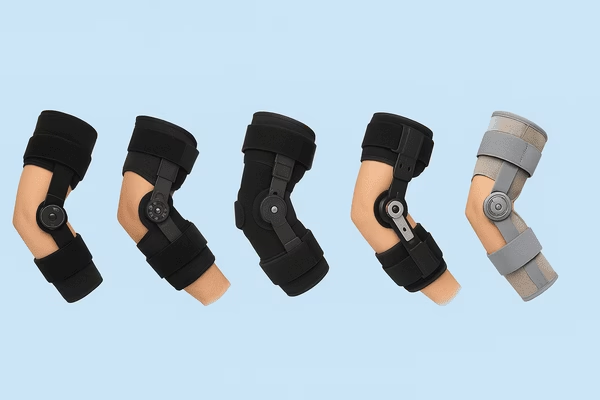
Types of Best Elbow Brace With Hinges
Elbow injuries, whether from sports, overuse, or accidents, can severely impact daily function. One of the most effective solutions for support and recovery is using an elbow brace with hinges. These braces provide stability, control range of motion, and reduce the risk of further injury. In this guide, we’ll explore the different types of the best elbow brace with hinges to help you choose the right one for your needs.
1. Post-Operative Hinged Elbow Braces
These are commonly prescribed after surgery, such as ligament reconstruction or fracture repair. They feature adjustable hinges that allow controlled motion during the healing process. Some models come with lock-out options to restrict movement completely if needed.
Best for: Post-surgical recovery, controlled rehabilitation, and range-of-motion protection.
Key Features:
- Adjustable flexion and extension settings
- Lightweight and breathable materials
- Locking mechanism for immobilization
2. Rehabilitative Hinged Elbow Braces
Rehabilitative elbow braces are ideal for patients who are past the initial recovery phase and are ready to regain strength and motion. These braces provide limited mobility to prevent hyperextension while allowing enough movement for gentle exercises.
Best for: Moderate recovery stages and therapy support.
Key Features:
- Removable hinges
- Moderate compression support
- Padded interior for comfort during longer wear
3. Compression Hinged Elbow Braces
These braces combine the benefits of compression with hinged support. They are designed to reduce swelling and enhance blood flow while preventing harmful movements that can aggravate existing injuries. Athletes often use them to protect against hyperextension and tendonitis.
Best for: Athletes, tendonitis, and minor ligament support.
Key Features:
- Elastic or neoprene material for compression
- Removable or lightweight hinges
- Sleek, low-profile design for daily use
4. Functional Hinged Elbow Braces
Functional elbow braces are designed for use during physical activity, especially in sports like tennis, baseball, or football. These braces allow full or near-full range of motion while offering lateral and medial support.
Best for: Sports injuries, chronic instability, and activity protection.
Key Features:
- Articulating hinges for natural movement
- Straps for customized tightness
- Durable material for impact resistance
5. Adjustable Range-of-Motion (ROM) Elbow Braces
ROM elbow braces are versatile options that allow you to precisely set the degree of flexion and extension. These are highly customizable and are often used in both pre- and post-surgery cases or for chronic elbow instability.
Best for: Customizable support, joint stabilization, and long-term use.
Key Features:
- Incremental ROM adjustments
- Detachable arm bars
- Anatomically contoured fit
Choosing the Right Hinged Elbow Brace
When selecting the best elbow brace with hinges, consider the following factors:
- Level of injury: Choose post-operative or ROM braces for serious injuries or surgeries.
- Activity level: Functional and compression braces are better for active individuals or athletes.
- Comfort and fit: Look for breathable materials and adjustable straps to ensure a snug, comfortable fit.
A hinged elbow brace can make a significant difference in recovery, pain management, and performance. Whether you’re healing from surgery or trying to prevent injury, there’s a type of hinged elbow brace tailored to your specific needs.
How to Choose the Best Elbow Brace With Hinges
Elbow braces with hinges are essential for anyone recovering from injury, managing chronic pain, or seeking extra support during physical activities. These braces provide stability and controlled movement, helping to reduce strain while allowing flexibility. But with so many options available, how do you choose the best elbow brace with hinges that suits your needs? This guide will walk you through key factors to consider so you can make an informed decision.
Unlike simple compression sleeves, hinged elbow braces offer adjustable support by limiting the range of motion. This is especially helpful for conditions such as tennis elbow, golfer’s elbow, ligament injuries, or post-surgical recovery. Hinged braces can protect the joint from hyperextension or overuse, promoting faster healing and reducing the risk of further injury.
1. Identify Your Specific Needs
Before shopping, understand why you need an elbow brace. Are you looking for:
- Injury recovery support?
- Chronic pain relief?
- Prevention during sports or heavy lifting?
- Post-operative immobilization?
Knowing your primary purpose will help you select the right level of support and hinge design.
2. Consider the Level of Support and Adjustability
Elbow braces with hinges come in various designs, from light support to maximum immobilization. Look for these features:
- Adjustable hinges: Allows you to control how much your elbow bends and straightens. This is crucial during different healing stages.
- Strap system: Multiple straps help secure the brace firmly but comfortably, preventing slipping.
- Locking mechanisms: Some braces have locking hinges for immobilization when needed.
Choose a brace that offers the right balance between stability and movement based on your activity level and injury severity.
3. Material and Comfort
Since you may wear the elbow brace for extended periods, comfort is vital. The material should be:
- Breathable: To reduce sweating and skin irritation. Neoprene or mesh panels are common in quality braces.
- Lightweight: Heavy braces can cause discomfort and limit daily activities.
- Durable: Reinforced stitching and high-quality materials ensure the brace lasts through rigorous use.
- Skin-friendly: Hypoallergenic materials reduce the risk of rashes or allergic reactions.
Try to find braces with padded interiors or soft linings for added comfort.
4. Size and Fit
A proper fit ensures effectiveness and comfort. Most hinged elbow braces come in multiple sizes. To find the right size:
- Measure the circumference of your arm around the elbow joint and a few inches above and below it.
- Refer to the manufacturer’s sizing chart carefully.
- Avoid braces that are too tight, which can cut circulation, or too loose, which can cause slipping.
Some braces have adjustable straps to help customize the fit further.
5. Ease of Use and Maintenance
Look for a brace that’s easy to put on and take off, especially if you need to wear it frequently. Velcro straps are typically the easiest. Additionally, check if the brace is machine washable or requires hand washing for hygiene.
6. Customer Reviews and Brand Reputation
Reading user reviews can reveal insights about real-world comfort, durability, and performance. Stick to reputable brands known for orthopedic supports, as they often offer better quality and warranty options.
7. Price and Warranty
While it might be tempting to buy the cheapest option, investing in a well-designed hinged elbow brace pays off in durability and comfort. Check if the product comes with a warranty or satisfaction guarantee to ensure your purchase is risk-free.
How to Properly Wear and Adjust a Hinged Elbow Brace
Wearing and adjusting a hinged elbow brace properly is essential for maximizing its therapeutic benefits and ensuring comfort throughout the healing process. Whether you are recovering from an injury, managing chronic conditions like tendonitis or arthritis, or protecting your elbow during physical activity, understanding how to use a hinged elbow brace correctly can make a significant difference in your recovery and overall experience.
When first putting on a hinged elbow brace, it is important to start with clean, dry skin to prevent irritation or slipping of the brace. The brace should fit snugly but not so tight that it restricts blood flow or causes discomfort. Begin by loosening all straps or fasteners so you can easily slide the brace onto your arm. Position the brace so that the hinge aligns precisely with the natural bend of your elbow. This alignment is crucial because the hinge mechanism is designed to control and limit the range of motion, protecting the joint from movements that could exacerbate injury or pain.
Once positioned correctly, fasten the straps securely but comfortably. The straps should hold the brace firmly in place without digging into the skin. Many braces come with adjustable Velcro straps or buckles, allowing you to customize the fit as swelling or muscle size changes during the healing process. It’s a good practice to check the tightness of the straps periodically throughout the day to ensure they have not loosened with movement or activity.
Adjusting the hinge itself is another key step in using a hinged elbow brace effectively. Most hinged braces feature settings that allow you to control how much your elbow can bend or straighten. Your healthcare provider or physical therapist will typically recommend the appropriate range of motion based on your injury or condition. Carefully follow these instructions when setting the hinge. If the brace has a dial or a pin system to set motion limits, take the time to adjust it precisely, ensuring it matches the prescribed degrees of flexion and extension.
When you wear the brace during daily activities, it’s essential to monitor for any signs of discomfort, pinching, or skin irritation. If you notice any redness, swelling, or numbness, remove the brace and adjust the straps or hinge settings as needed. Sometimes, wearing a thin sleeve or padding underneath the brace can help reduce friction and improve comfort, especially if you need to wear the brace for extended periods.
It is also important to maintain the brace properly. Regularly clean it according to the manufacturer’s instructions to keep it hygienic and prevent odors. Inspect the brace frequently for any signs of wear or damage, such as frayed straps or a malfunctioning hinge, and replace it if necessary to ensure ongoing support and safety.
During activities, the hinged elbow brace should provide a balance between support and mobility. It allows you to perform necessary movements while preventing excessive strain on the elbow joint. This controlled mobility helps promote healing by avoiding stress on injured tissues and reducing the risk of re-injury. However, it is equally important to listen to your body and avoid pushing beyond the recommended limits, even if the brace feels comfortable. Overextending your elbow too soon can delay healing or cause further damage.
In summary, properly wearing and adjusting a hinged elbow brace involves careful attention to fit, hinge alignment, and motion control settings. Starting with the brace loosened, position it so the hinge matches the elbow joint, then secure the straps comfortably. Adjust the hinge according to medical guidance, ensuring the brace limits motion appropriately to protect the joint. Monitor for any discomfort or skin issues and maintain the brace through regular cleaning and inspection. By following these steps, you can optimize the benefits of a hinged elbow brace, facilitating a smoother recovery while maintaining necessary mobility and comfort throughout your daily routine.