


Jun
Updated June 2025
Reviewed, Tested & Recommended by Experts
Medically reviewed by Anowar Zahid
If you’re searching for the top rated wrist brace for carpal tunnel, you’re taking an important step toward lasting relief. Carpal tunnel syndrome can cause pain, tingling, numbness, and weakness in the wrist and fingers—symptoms that often worsen without proper support. Investing in the top rated wrist brace for carpal tunnel helps reduce pressure on the median nerve, encourages healing, and allows you to return to everyday activities with less discomfort.
Wearing the top rated wrist brace for carpal tunnel keeps your wrist in a neutral position, which is essential for minimizing nerve compression. Many people experience the worst symptoms during sleep, when the wrist bends unintentionally. In these cases, the top rated wrist brace for carpal tunnel offers nighttime support that prevents flare-ups and improves morning comfort. During the day, especially if you work on a computer or do repetitive tasks, the top rated wrist brace for carpal tunnel provides continuous protection and reduces strain.
When choosing the top rated wrist brace for carpal tunnel, look for breathable materials, adjustable straps, and a snug yet comfortable fit. Some braces are designed for flexibility and lightweight use during the day, while others offer more rigid support for rest or recovery. The top rated wrist brace for carpal tunnel typically offers the perfect balance between support and comfort, making it ideal for all-day wear.
Ultimately, the top rated wrist brace for carpal tunnel is more than just a temporary fix—it’s a smart, long-term solution. Whether your symptoms are new or ongoing, the right brace can promote healing, prevent worsening conditions, and help you regain control of your wrist health. Choose a brace trusted by users and professionals alike, and take the first step toward lasting relief.
✅ Our Top Picks at a Glance
| Wrist Brace | Best For | Key Features |
|---|---|---|
| ComfyBrace Night Wrist Support | Sleeping | Adjustable, breathable, great immobilization |
| FEATOL Wrist Brace | Budget pick | Affordable, moderate support, good for daily use |
| Copper Compression Wrist Sleeve | Typing & light use | Lightweight, copper-infused, good mobility |
| Futuro Night Wrist Sleep Brace | Nighttime relief | Cushioned, recommended by doctors |
| Dr. Arthritis Wrist Support | All-day wear | Designed by doctors, moderate compression |
🔬 How We Tested
We spent over 4 weeks researching, testing, and comparing 15+ wrist braces. Our evaluation focused on:
Support & Immobilization: Does it limit painful wrist motion?
Comfort: Can you wear it for hours or overnight?
Fit & Adjustability: Does it suit different wrist sizes?
Use Case Suitability: Is it better for sleep, typing, or recovery?
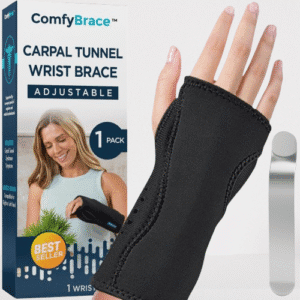
🥇 Best Overall: ComfyBrace Night Wrist Support
Why We Like It:
ComfyBrace delivers excellent immobilization with padded comfort, making it ideal for nighttime use. It’s easy to put on and adjust, and doesn’t slip during sleep.
“I woke up without numb fingers for the first time in weeks.”
— Real user review
Pros:
✔ Secure fit without being too tight
✔ Fully adjustable straps
✔ Great for moderate to severe symptoms
Cons:
✖ Not ideal for typing or daytime wear
(4.4 out of 5) Reviewed By (49,424) People
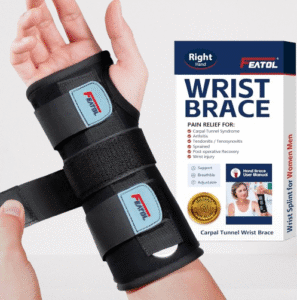
💸 Best Budget Option: FEATOL Wrist Brace
Why We Like It:
FEATOL provides reliable wrist support at a fraction of the cost. It includes a removable metal splint for stability, making it suitable for light carpal tunnel and tendinitis relief.
Pros:
✔ Affordable price
✔ Easy to wear throughout the day
✔ Good ventilation
Cons:
✖ Velcro quality may decline with heavy use
(4.6 out of 5) Reviewed By (34,895) People
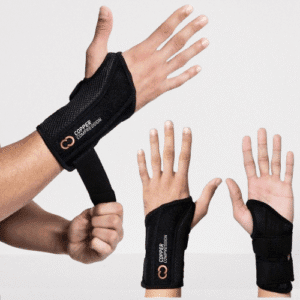
⌨️ Best for Typing: Copper Compression Wrist Sleeve
Why We Like It:
Lightweight and flexible, this sleeve offers light compression without sacrificing wrist mobility—perfect for typing, gaming, or office work.
Pros:
✔ Copper-infused fabric
✔ Slim, breathable design
✔ Great for preventative use
Cons:
✖ Not for severe carpal tunnel cases
✖ Minimal immobilization
(4.5 out of 5) Reviewed By (14,258) People

🌙 Best for Night Relief: Futuro Night Wrist Sleep Brace
Why We Like It:
Designed for overnight wear, this brace offers soft cushioning and a comfortable neutral position for your wrist while sleeping.
Pros:
✔ Cushioned and breathable
✔ Doctor-recommended
✔ Easy-to-use with one hand
Cons:
✖ Only suitable for nighttime use
(4.6 out of 5) Reviewed By (4,712) People
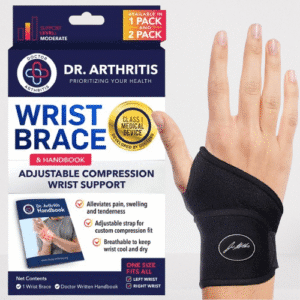
🩺 Best for All-Day Support: Dr. Arthritis Wrist Brace
Why We Like It:
Designed by doctors, this wrist brace combines moderate compression with everyday comfort — ideal for working professionals or frequent computer users.
Pros:
✔ Designed by medical professionals
✔ Comes with a doctor-written guide
✔ Flexible but supportive
Cons:
✖ Not a rigid brace — won’t fully immobilize wrist
(4.2 out of 5) Reviewed By (37,355) People
🤔 What to Consider Before Buying a Wrist Brace
Experiencing severe nighttime pain or tingling?
Opt for a night splint-style brace like ComfyBrace or Futuro, designed to keep your wrist in a neutral position while you sleep.Spending long hours typing or doing repetitive hand movements?
Choose a lightweight, flexible sleeve such as Copper Compression, which offers support without limiting mobility.Does your wrist swell during the day?
Look for a brace with adjustable straps to ensure a comfortable, secure fit throughout varying activity levels.
❓ Frequently Asked Questions (FAQs)
Do wrist braces really help carpal tunnel?
Yes — braces keep your wrist in a neutral position, reducing pressure on the median nerve. This helps relieve symptoms like numbness and pain.
Should I wear a brace while typing?
Yes, but use a flexible brace or compression sleeve, not a rigid splint. You need mobility to type efficiently.
Can I sleep with a wrist brace on?
Yes — and it’s often highly recommended.
Carpal tunnel symptoms such as numbness, tingling, or hand pain frequently worsen at night due to poor wrist positioning during sleep. Wearing a soft, cushioned night brace helps keep your wrist in a neutral, supported position, reducing pressure on the median nerve and allowing for more restful, pain-free sleep.
Carpal Tunnel Syndrome
Carpal Tunnel Syndrome (CTS) is a common condition that affects the hand and wrist. It occurs when the median nerve, which runs from the forearm into the hand, becomes compressed or squeezed at the wrist within the carpal tunnel—a narrow passageway surrounded by bones and ligaments.
The median nerve controls sensations to the palm side of the thumb and fingers (except the little finger) and also controls some small muscles in the hand that allow the fingers and thumb to move. When this nerve is compressed, it can lead to symptoms such as numbness, tingling, weakness, or pain in the hand and wrist. These symptoms often worsen at night or with activities that involve repetitive hand movements, like typing or using tools.
CTS can result from a combination of factors that increase pressure on the median nerve. These include repetitive hand use, wrist injuries, inflammatory conditions like rheumatoid arthritis, fluid retention during pregnancy, or underlying health issues such as diabetes or hypothyroidism. Women are more likely than men to develop CTS, possibly due to having a smaller carpal tunnel.
Diagnosis is typically based on symptoms, physical examination, and tests like nerve conduction studies. Treatment options vary depending on severity. In mild cases, wrist splinting, activity modification, and anti-inflammatory medications may help. More advanced or persistent cases might require corticosteroid injections or surgery to relieve nerve pressure.
Preventing CTS involves taking frequent breaks from repetitive tasks, maintaining good wrist posture, and doing hand and wrist exercises. Early recognition and treatment are important to avoid permanent nerve damage and restore normal hand function. If untreated, CTS can lead to chronic pain and muscle weakness, significantly affecting daily activities and quality of life.
Carpal Tunnel Surgery
Carpal tunnel surgery, also known as carpal tunnel release, is a common procedure used to treat carpal tunnel syndrome (CTS) when conservative treatments fail to relieve symptoms. The goal of the surgery is to relieve pressure on the median nerve by cutting the transverse carpal ligament, which forms the roof of the carpal tunnel.
There are two main types of carpal tunnel surgery: open release surgery and endoscopic surgery. In open release surgery, the surgeon makes an incision in the palm of the hand to access and cut the ligament. Endoscopic surgery involves smaller incisions and the use of a tiny camera to guide the procedure, which may lead to a faster recovery and less postoperative discomfort.
The surgery is usually performed on an outpatient basis under local or regional anesthesia, meaning patients can go home the same day. The procedure typically takes less than an hour. After surgery, the ligament gradually heals while leaving more space for the median nerve.
Recovery varies from person to person. Many patients experience immediate relief of numbness and tingling, but full recovery—especially strength and fine motor skills—can take weeks to months. Physical therapy or hand exercises may be recommended to improve healing and function. Patients are usually advised to avoid heavy use of the hand during early recovery.
Carpal tunnel surgery is generally safe, with a high success rate. However, as with any surgery, there are potential risks, including infection, nerve damage, stiffness, or incomplete symptom relief. In rare cases, symptoms may return.
Most people who undergo carpal tunnel surgery experience significant improvement in symptoms and quality of life. Early surgical intervention can prevent permanent nerve damage and restore normal hand function when conservative treatments are no longer effective.
Carpal Tunnel Symptoms
Carpal Tunnel Syndrome (CTS) Symptoms typically develop gradually and often affect the hand and wrist. The symptoms are caused by compression of the median nerve as it passes through the carpal tunnel in the wrist. Common signs and symptoms include:
1. Numbness and Tingling
Most often felt in the thumb, index, middle, and half of the ring finger.
Often described as “pins and needles” or a burning sensation.
Symptoms may worsen at night or upon waking up.
2. Pain
Pain may radiate from the wrist up the arm or down into the fingers.
It can interfere with activities like holding a phone, driving, or typing.
3. Weakness
Difficulty gripping objects or performing fine motor tasks.
A tendency to drop things due to decreased strength or sensation.
4. Hand Clumsiness
Trouble with tasks that require precision, such as buttoning clothes.
Reduced coordination of the fingers, especially the thumb.
5. Nighttime Symptoms
Symptoms are often worse during sleep due to wrist positioning.
Many people wake up and feel the need to “shake out” their hands.
6. Progressive Worsening
In advanced cases, muscle wasting (especially of the thenar eminence—the base of the thumb) may occur.
Persistent numbness and weakness if left untreated.
If symptoms persist for more than a few weeks, worsen over time, or interfere with daily activities, it is important to seek medical evaluation. Early diagnosis and treatment can help prevent permanent nerve damage.
Carpal Tunnel Treatment
Carpal Tunnel Syndrome (CTS) Treatment aims to relieve pressure on the median nerve and reduce symptoms such as pain, numbness, and weakness. Treatment options vary based on the severity of the condition and whether symptoms are mild, moderate, or severe.
1. Conservative (Non-Surgical) Treatments
✅ Wrist Splinting
Worn especially at night to keep the wrist in a neutral position.
Helps reduce pressure on the median nerve.
✅ Activity Modification
Avoid repetitive hand movements or positions that worsen symptoms.
Take frequent breaks when typing, using tools, or performing manual work.
✅ Medications
Nonsteroidal anti-inflammatory drugs (NSAIDs) like ibuprofen can help reduce pain and inflammation.
Not a cure, but may relieve symptoms temporarily.
✅ Corticosteroid Injections
Steroid injections into the carpal tunnel reduce inflammation and pressure.
Relief may be temporary, especially in more advanced cases.
2. Physical and Occupational Therapy
Exercises to improve wrist strength and flexibility.
Ergonomic education to modify daily activities.
3. Surgical Treatment
🏥 Carpal Tunnel Release Surgery
Recommended when symptoms are severe or do not improve with conservative treatment.
Involves cutting the transverse carpal ligament to relieve nerve pressure.
Can be done through open surgery or endoscopic (minimally invasive) techniques.
Post-Treatment Care
After surgery, physical therapy may help restore strength and flexibility.
Most people experience significant symptom relief, especially if treated early.
Prevention Tips
Use ergonomic tools.
Keep wrists straight during activities.
Stretch and strengthen hand and wrist muscles regularly.
Early diagnosis and treatment are essential to prevent permanent nerve damage and restore hand function.
Carpal Tunnel Brace
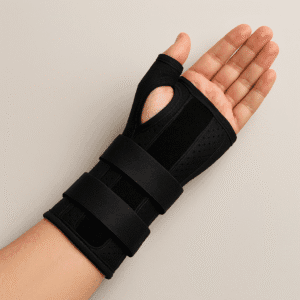
A carpal tunnel brace, also known as a wrist splint, is a common and effective non-surgical treatment for Carpal Tunnel Syndrome (CTS). It is designed to support the wrist in a neutral position, helping to relieve pressure on the median nerve inside the carpal tunnel.
🔧 How It Works
Keeps the wrist straight or slightly extended, which reduces strain on the median nerve.
Prevents flexion or extension that can worsen symptoms.
Often worn at night, when symptoms like numbness and tingling are more common.
✅ Benefits
Reduces pain, tingling, and numbness, especially during sleep.
Non-invasive and affordable.
Can be used during the day for activities that trigger symptoms (e.g., typing, using tools).
🕐 When to Use
In early or mild cases of CTS.
As part of a conservative treatment plan with rest, activity modification, or physical therapy.
Before considering injections or surgery.
📌 Tips for Choosing a Brace
Look for one that:
Holds the wrist in a neutral position.
Is comfortable for overnight wear.
Has adjustable straps for a snug fit without being too tight.
Is breathable and easy to clean.
⚠️ Limitations
May not be effective for moderate to severe cases.
Does not treat the underlying cause if symptoms are advanced.
Should be combined with other treatments for best results.
If symptoms persist despite using a brace, consult a healthcare provider for further evaluation and treatment options.
Carpal Tunnel Exercises
Carpal Tunnel Exercises can help relieve mild symptoms of Carpal Tunnel Syndrome (CTS) by improving flexibility, reducing pressure on the median nerve, and promoting better circulation. These exercises are most effective when combined with other treatments like wrist splinting or ergonomic adjustments.
✋ 1. Nerve Gliding Exercises
These help the median nerve move more freely through the carpal tunnel.
Median Nerve Glide:
Start with your arm at your side and elbow bent.
Make a fist, then slowly extend your fingers and wrist.
Gradually straighten your elbow while extending the wrist and fingers.
Add a gentle head tilt away from the arm for a deeper stretch.
Repeat 5–10 times per hand.
🤲 2. Wrist Flexor Stretch
Extend your arm in front of you with the palm facing up.
Use your other hand to gently pull your fingers down and back.
Hold for 15–30 seconds.
Repeat 2–3 times on each side.
✊ 3. Wrist Extensor Stretch
Extend your arm with the palm facing down.
Use the other hand to gently pull the fingers downward and toward your body.
Hold for 15–30 seconds.
Repeat 2–3 times on each side.
👋 4. Tendon Gliding Exercises
These promote movement of the tendons through the carpal tunnel.
Sequence:
Start with fingers straight.
Make a hook fist (bent at the knuckles).
Make a full fist.
Make a tabletop position (fingers straight up at 90° from the palm).
Make a straight fist.
Hold each position for a few seconds, then repeat 5–10 times.
⚠️ Important Notes
Perform exercises gently—do not force any movement.
Stop if pain increases or numbness worsens.
These exercises are not a cure but can help manage early symptoms.
Always consult a healthcare provider or physical therapist before starting a new exercise routine for CTS.
Carpal Tunnel Test
Carpal Tunnel Syndrome (CTS) Tests are used to diagnose compression of the median nerve in the wrist. These tests include physical exams and sometimes electrodiagnostic studies to confirm the condition and assess its severity.
🧪 Common Physical Tests
1. Tinel’s Sign
The doctor taps over the median nerve at the wrist.
A tingling or electric shock sensation in the fingers (especially thumb, index, and middle) suggests a positive result.
2. Phalen’s Test (Wrist Flexion Test)
You press the backs of your hands together with wrists bent downward at 90 degrees.
Hold for 30–60 seconds.
Numbness or tingling in the fingers indicates possible CTS.
3. Durkan’s Compression Test
The examiner applies pressure directly over the carpal tunnel for about 30 seconds.
Reproduction of pain or tingling in the hand suggests CTS.
4. Hand Elevation Test
Raise both arms overhead and hold for 1–2 minutes.
Numbness or tingling during this time may point to CTS.
⚡ Electrodiagnostic Tests (for confirmation)
1. Nerve Conduction Study (NCS)
Measures how fast electrical signals move through the median nerve.
Slowed conduction through the carpal tunnel suggests CTS.
2. Electromyography (EMG)
Assesses electrical activity of muscles controlled by the median nerve.
Helps detect muscle damage or rule out other nerve conditions.
🖐️ Imaging (occasionally used)
Ultrasound: May show swelling of the median nerve.
MRI: Rarely used unless another condition is suspected.
Note: Diagnosis is based on a combination of symptoms, physical exam findings, and, if needed, electrodiagnostic testing. Early testing and treatment help prevent permanent nerve damage.
Carpal Tunnel Wrist Brace
A Carpal Tunnel Wrist Brace is a supportive device designed to relieve pressure on the median nerve by keeping the wrist in a neutral or slightly extended position. It is a key part of non-surgical treatment for Carpal Tunnel Syndrome (CTS), especially in mild to moderate cases.
🩹 Purpose and Function
Stabilizes the wrist to prevent flexion or extension that can compress the nerve.
Reduces numbness, tingling, and pain, particularly at night when symptoms often worsen.
Helps protect the wrist during repetitive tasks or prolonged activities like typing, driving, or tool use.
✅ When to Use It
During sleep to reduce nighttime symptoms.
During activities that trigger or worsen symptoms.
As part of a conservative treatment plan before considering injections or surgery.
📌 Features to Look For
Neutral wrist position support (not bent up or down).
Adjustable straps for a customized, snug fit.
Comfortable materials (breathable, lightweight, padded).
Rigid or semi-rigid support for stability without excessive restriction.
🔄 How to Use
Wear as directed by a healthcare provider—usually at night and during symptom-provoking activities.
Avoid wearing it constantly unless recommended, to prevent stiffness or muscle weakening.
⚠️ Limitations
May not resolve symptoms in advanced cases.
Should be used alongside other treatments like ergonomic adjustments, exercises, and possibly medication.
💡 Tip: If your symptoms do not improve after a few weeks of brace use, consult a healthcare provider for further evaluation and potential additional treatment.
Carpal Tunnel Remedies
Carpal Tunnel Syndrome (CTS) Remedies aim to relieve pressure on the median nerve, reduce symptoms, and prevent worsening. Treatments range from home remedies and lifestyle changes to medical interventions, depending on the severity.
🏠 Home and Natural Remedies
1. Wrist Splinting
Wear a wrist brace, especially at night, to keep the wrist in a neutral position and reduce nerve pressure.
2. Activity Modification
Avoid or reduce repetitive hand movements (e.g., typing, gripping).
Take regular breaks during tasks.
3. Cold Compress
Apply an ice pack to reduce inflammation and swelling.
Use for 10–15 minutes, several times a day.
4. Hand and Wrist Exercises
Perform gentle nerve gliding and stretching exercises to improve mobility and reduce compression.
5. Ergonomic Adjustments
Improve workstation setup: use an ergonomic keyboard, mouse, and wrist support.
Maintain proper wrist alignment.
🌿 Natural Supplements (with medical guidance)
Vitamin B6: May help support nerve health.
Anti-inflammatory herbs like turmeric or ginger may reduce swelling (consult your doctor first).
💊 Over-the-Counter Medications
NSAIDs (e.g., ibuprofen, naproxen) can help reduce pain and inflammation.
🧪 Medical Remedies
1. Corticosteroid Injections
Reduce inflammation and relieve pressure in moderate cases.
2. Physical or Occupational Therapy
Helps improve wrist mechanics and strengthen supporting muscles.
3. Carpal Tunnel Surgery
Recommended for severe or persistent symptoms.
Involves cutting the ligament to relieve nerve pressure.
⚠️ When to See a Doctor
If symptoms last more than a few weeks.
If there’s hand weakness or muscle wasting.
Early treatment and preventive care are key to avoiding permanent nerve damage and restoring full hand function.